BEYOND NUCLEAR PUBLICATIONS

Search
JOIN OUR NETWORK


Follow Us on Twitter!

Radioactive Waste

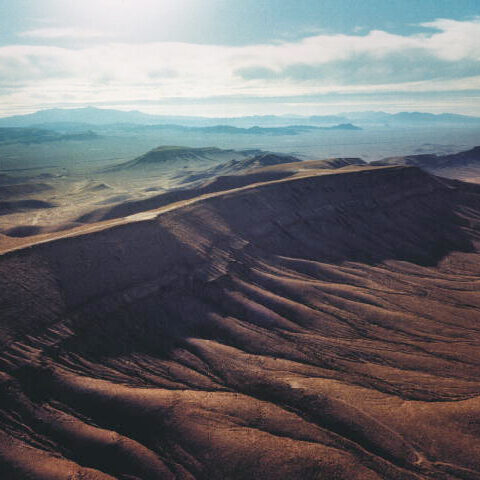
No safe, permanent solution has yet been found anywhere in the world - and may never be found - for the nuclear waste problem. In the U.S., the only identified and flawed high-level radioactive waste deep repository site at Yucca Mountain, Nevada has been canceled. Beyond Nuclear advocates for an end to the production of nuclear waste and for securing the existing reactor waste in hardened on-site storage.

.................................................................................................................................................................................................................

Thursday
Nov082012

Attendance and public comments critically needed at NRC Nuke Waste Con Game environmental scoping hearing

The U.S. Nuclear Regulatory Commission (NRC) has announced that it will hold environmental scoping sessions on Wednesday, November 14th to take public comments about what should be included in its Environmental Impact Statement (EIS) on court-ordered changes to its Nuclear Waste Confidence Decision and Rule. See NRC's meeting notice, as well as the agenda for the hearing sessions, the associated Federal Register notice, and NRC's Waste Confidence website.

NRC has not done an EIS on the risks of on-site storage of high-level radioactive waste in pools and dry casks. Last June, a coalition of several state attorneys general and environmental groups won a landmark victory when the D.C. Circuit Court of Appeals nullified NRC's 30 year old Nuclear Waste Confidence Decision and Rule, and ordered the agency to carry out an EIS at long last. In 2010, NRC had flippantly ruled that high-level radioactive wastes were safe and sound at reactor sites for at least 120 years, and was considering extending that ruling out to 200 to 300 years. The court nullified such nonsense, ordering an EIS. The EIS -- which realistically should take on the order of seven years to carry out, if done properly -- will cause at least two years of delay in final NRC approval of new reactor construction and operations licenses, as well as old reactor license extensions.

It is critical that concerned citizens and environmental groups attend and provide public comments at these environmental scoping hearing sessions on Nov. 14th. The two sessions will be identical.

The first session, to be held from 1-4 PM Eastern (10 AM-1 PM Pacific) will involve both an in-person public hearing at NRC's HQ in Rockville, MD (in the One White Flint North Commissioners' Hearing Room), as well as the opportunity to take part by webcast and teleconferece. The second session will be webcast/teleconferenced only (no in-person meeting), and will be held from 9 PM-12 Midnight Eastern (6-9 PM Pacific).

To present comments by telephone during the webcast, dial 1-800-475-8385; when prompted, enter passcode 3682386, followed by the # sign.

To access the webcast, go to http://video.nrc.gov for connection information.

Register to participate and request to present oral comments, whether in-person or via teleconference, by contacting Ms. Susan Wittick (extension 3187) or Ms. TR Rowe (ext. 3133) at the following phone number: 1-800-368-5642. You can also register by email at WCOutreach@nrc.gov.

As Beyond Nuclear urged in our weekly email bulletin last week regarding the NRC Chairwoman, please also consider sending letters or emails, or making phone calls, to the five members of the U.S. Nuclear Regulatory Commission (click on each Commissioners' name to see their contact info.), as well as to NRC Staff liaison Sarah Lopas (NEPA Communications Project Manager, Office of Nuclear Materials Safety and Safeguards, U.S. NRC, Washington, D.C. 20555-0001, Sarah.Lopas@nrc.gov, 301-492-3425), requesting an extension of time for the hearings, as well as an extension of time for the entire environmental scoping process, as the NRC has not provided the public with enough time to study the issues and prepare either written or oral comments. Point out that the lack of adequate information in the Federal Register Notice, which the NRC should have provided in the first instance -- such as what the proposed action is, and what are reasonable alternatives to it, basic components of any National Environmental Impact Statement (NEPA) environmental impact statement process. Ask the NRC Commissioners and Staff liaison to withdraw the scoping notice and re-publish it in form that passes legal muster under NEPA. In addition, urge the NRC Commissioners and NRC Staff liaison to hold regional hearings, so that those living in the shadows of nuclear power plants and their stored high-level radioactive waste can attend and talk to NRC officials in person. See Diane Curran et al.'s letter below for ideas about what to say.

Please see below for additional background information, including strategic ideas for key public comments you can make.

BACKGROUND INFORMATION

See Beyond Nuclear's pamphlet on the Mountain of Radioactive Waste 70 Years High (cover, above left). A key message to deliver to NRC: "It's time to stop making it!"

See Beyond Nuclear's backgrounder on the risks of GE Mark I reactor high-level radioactive waste storage pools, in light of the Fukushima Daiichi nuclear catastrophe.

See Beyond Nuclear's backgrounder on radioactive leaks from high-level radioactive waste storage pools, into soil, groundwater and surface water (note this is not an exhaustive list -- Hatch in Georgia, and recently Davis-Besse in Ohio, have also suffered pool leaks). Beyond Nuclear's report "Leak First, Fix Later" has an entire chapter about the pool leaks at Entergy's Indian Point reactors near New York City.

Diane Curran, Geoffrey Fettus, and Mindy Goldstein, the attorneys who led the environmental coalition's effort in the Nuclear Waste Confidence lawsuit, have written to the five NRC Commissioners on behalf of 25 groups, urging that the current environmental impact statement proceeding be suspended and corrected, due to major legal errors in NRC's notice and approach, which violate the National Environmental Policy Act.

Blue Ridge Environmental Defense League (BREDL), one of the four environmental groups (also including Natural Resources Defense Council, Riverkeeper, and Southern Alliance for Clean Energy) which joined the States of New York, Vermont, New Jersey, and Connecticut's Attorneys General in suing NRC over the Nuclear Waste Confidence Rule, has put out a helpful fact sheet about the upcoming Nov. 14th environmental scoping sessions, as well as related Dec. 5th and 6th NRC webinars.

An important comment to make is that Hardened On-Site Storage (HOSS) is a wise, interim alternative to risky radioactive waste transport, as well as risky pool and dry cask storage. Nearly 200 environmental groups have endorsed HOSS for well over a decade, but their call has fallen on deaf ears at NRC. (To learn more about the risks of radioactive waste transport, see Beyond Nuclear's website sub-section on this subject, as well as that of NIRS and the State of Nevada Agency for Nuclear Projects.)

To learn more about the risks of on-site pool and dry cask storage, see Beyond Nuclear's relevant website section, as well as that of NIRS.

To learn more about the risks of permanent dumpsites, see Beyond Nuclear's and NIRS's websites. To learn more about the risks of the Yucca Mountain dumpsite proposal in particular, see the State of Nevada's website.

To learn more about the risks of "centralized interim storage" (parking lot dumps), see Beyond Nuclear's and NIRS's websites.

Monday
Oct292012

"A Mountain of Radioactive Waste 70 Years High: Ending the Nuclear Age," Chicago, December 1-3

A number of experts have confirmed they will speak, including (alphabetical by last name): Kinnette Benedict, Executive Director & Publisher, Bulletin of the Atomic ScientistsRobert Chavez, indigenous youth anti-uranium activist, Okayowingeh (San Juan Pueblo), New Mexico; Diane D'Arrigo, Radioactive Waste Project Director, Nuclear Information and Resource ServiceKay Drey, Beyond Nuclear board member, and nearly four decade long anti-nuclear activist; Norma M. Field, Ph.D., Robert S. Ingersoll Distinguished Service Professor in Japanese Studies in East Asian Languages and Civilizations, University of Chicago; Arnie Gundersen, Chief Engineer, Fairewinds AssociatesPaul Gunter, Reactor Oversight Project Director, Beyond NuclearKristen Iversen, author, Full Body Burden: Growing Up in the Nuclear Shadow of Rocky FlatsArne Jungjohann, Director for the Environment and Global Dialogue Program of the Washington, D.C. office, Heinrich Boell FoundationKevin Kamps, Radioactive Waste Watchdog, Beyond Nuclear; and Dr. Arjun Makhijani, President, Institute for Energy and Environmental Research, and author, Carbon-Free and Nuclear-Free: A Roadmap for U.S. Energy PolicyDr. Jeff Patterson, Board of Directors, Physicians for Social Responsibility, Madison, Wisconsin; Kathleen Rude, conducting Active Hope (a workshop to deal with Nuclear Despair, based on the works of Joanna Macy); Kendra UlrichFriends of the Earth USA, Washington, DC; Charmaine White Face, Coordinator, Defenders of the Black Hills, Rapid City, South Dakota; and  Akiko YoshidaFriends of the Earth, Tokyo, Japan

In addition, a film has been confirmed to be screened: The Atomic States of Americaby Sheena Joyce and Don Argot of 9.14 Pictures in Philadelphia.

Finally, on Monday, December 3rd, an optional field trip to Red Gate Woods is being organized. This is the forest preserve in the southwestern suburbs of Chicago where Fermi's first radioactive wastes of the Atomic Age were buried under a mound of earth, and marked with a simple stone marker. Bicycle and hiking paths pass close by. Previous tours to the site have not registered higher than normal background radioactivity levels, although concerns persist about eventual leakage of radioactivity from the site into the environment. We will be sure to take radiation monitors on our Dec. 3rd field trip, in order to document radioactivity levels, as well as to protect ourselves.

Thursday
Oct252012

NRC rushing public comment on court-ordered environmental assessment of "Nuke Waste Con Game"

U.S. NRC Chairwoman Allison MacfarlaneThe U.S. Nuclear Regulatory Commission (NRC) has just announced a single in-person environmental scoping hearing (also viewable online), for November 14th, at its Rockville, Maryland headquarters, as well as two webinar-only scoping hearings (Dec. 5th & 6th), as it seeks to fulfill a court-ordered environmental assessment of its "Nuclear Waste Confidence Decision and Rule." NRC's current deadline for public comments on its environmental scoping is January 2nd, 2013, a remarkably short time period (just over two months long, including the upcoming elections, as well as the holidays). Obviously, NRC is trying to rush the process, and keep public involvement to a bare minimum.

Please contact NRC Chairwoman Allison Macfarlane (photo, left) and request that the environmental scoping period be extended. Also request that additional in-person hearings be held in communities living in the shadows of high-level radioactive waste storage pools and dry casks. Chairwoman Macfarlane can be emailed at Chairman@nrc.gov, phoned at (301) 415-1750, or written at U.S. Nuclear Regulatory Commission, Mail Stop O-16G4, Washington, DC 20555-0001.

For decades, NRC has used its "Nuclear Waste Confidence Decision and Rule" to block challenges in its atomic reactor licesning proceedings to the generation of high-level radioactive wastes, even though its is among the most hazardous substances ever created, and no safe, sound solution to its forever hazards has been found anywhere in the world for over half a century. Critics have long referred to this as NRC's "Nuke Waste Con Game."

On June 8, 2012, however, the U.S. Circuit Court of Appeals for the District of Columbia Circuit said "Game Over!", ruling in favor of a coalition of environmentalists and states, that NRC must perform an environmental assessmet (EA) on the risks of long-term irradiated nuclear fuel storage in pools and dry casks at reactor sites. NRC has since acknowledged that the EA will take at least two years to complete, thus postponing any final approval of combined Construction and Operating License Applications (COLAs) -- as at Vogtle, Georgia and Summer, South Carolina -- for at least that long. The same holds true for any final approval of 20-year license extension applications at age-degraded, old reactors. However, NRC is allowing all licensing proceedings to continue, till just shy of the finalization point, at which point they will be suspended pending finalization of the EA.

Environmental groups have used the court ruling to challenge three dozen proposed new, and age-degraded old, reactors seeking licenses. For its part, Beyond Nuclear has cited the court ruling to challenge old reactor license extensions at Davis-Besse, Ohio and Grand Gulf 1, Mississippi, as well as to challenge proposed new reactors at Grand Gulf 2, Mississippi, and Fermi 3, Michigan.

Watch Beyond Nuclear's website for updates, and ideas on public comments you can make about NRC's "Nuke Waste Con Game" environmental scoping. Please spread the word on this important issue!

Friday
Oct192012

Acrobatics with high-level radioactive waste required to free up space in Indian Point Unit 3 storage pool

This NRC graph shows that in a few years, almost all high-level radioactive waste storage pools in the U.S. will be filled to capacity. Operating reactors will then have to install on-site dry cask storage to provide "overflow parking" for ever more high-level radioactive waste.As reported by LoHud.com, Indian Point Unit 3's crane is not strong enough to lift standard sized high-level radioactive waste transfer casks. Therefore a convoluted procedure is required, first placing IP-3's irradiated nuclear fuel into a small sized transfer cask that the crane can lift, then moving it into the IP-2 storage pool, then transferring the waste into a standard sized cask, which the stronger IP-2 crane can handle, before moving the cask to outdoor dry cask storage. All of this is required because there is not any more room in IP-3's pool for any more waste storage, so the oldest, most radioactively decayed and thermally cooled wastes must be removed in order to make more room to receive hotter, more radioactive wastes just generated by IP-3's atomic reactor. Newly discharged high-level radioactive waste must be stored underwater for a minimum of five years, before it can be transferred to dry cask storage.

Thursday
Oct182012

Beyond Nuclear debates "thorium power" proponent at Sierra Club meeting

On October 10th, Beyond Nuclear's Kevin Kamps debated Timothy Maloney, a proponent of so-called "thorium (nuclear) power," at a meeting of the Nepessing Group of the Sierra Club's Michigan Chapter, at Mott Community College's Regional Technical Center in Flint. The Nepessing Group of Michigan represents Sierra Club members in Genesee, Lapeer, and northern Oakland counties.

Kevin's research in preparation for the debate depended on: a Beyond Nuclear backgrounder compiled by Linda Gunter; "Thorium Fuel -- No Panacea for Nuclear Power," by Dr. Arjun Makhijani of Institute for Energy and Environmental Research and Michele Boyd of Physicians for Social Responsibility (2009); a Science Friday program entitled "Is Thorium a Magic Bullet for our Energy Problems?" featuring Dr. Makhijani (May 4, 2012); "Thinking about Thorium" by Dr. Gordon Edwards of Canadian Coalition for Nuclear Responsibility (Sept. 16, 2012); "Thorium Reactors: Back to the Dream Factory," by Dr. Edwards (July 13, 2011); and "What is the Thorium Cycle?" by Dr. Edwards (1978).

The Thorium-232/Uranium-233 nuclear fuel chain shares many similarities with the Uranium-235 and Plutonium-239 nuclear fuel chains, including the risk of nuclear weapons proliferation, the risk that reactors could unleash catastrophic amounts of radioactivity (particularly from intentional terrorist attacks or acts of warfare), the unsolved (unsolvable?!) radioactive waste problem, the astronomical expense of RDD (research, development, and demonstration) for "thorium reactors," and the environmental ruination downwind and downstream (as well as up the food chain and down the generations) from reprocessing facilities.